Series

→ Crafting the Musical

Identity of a Series

Paper Texture

From the First Conversation to the Final Episode

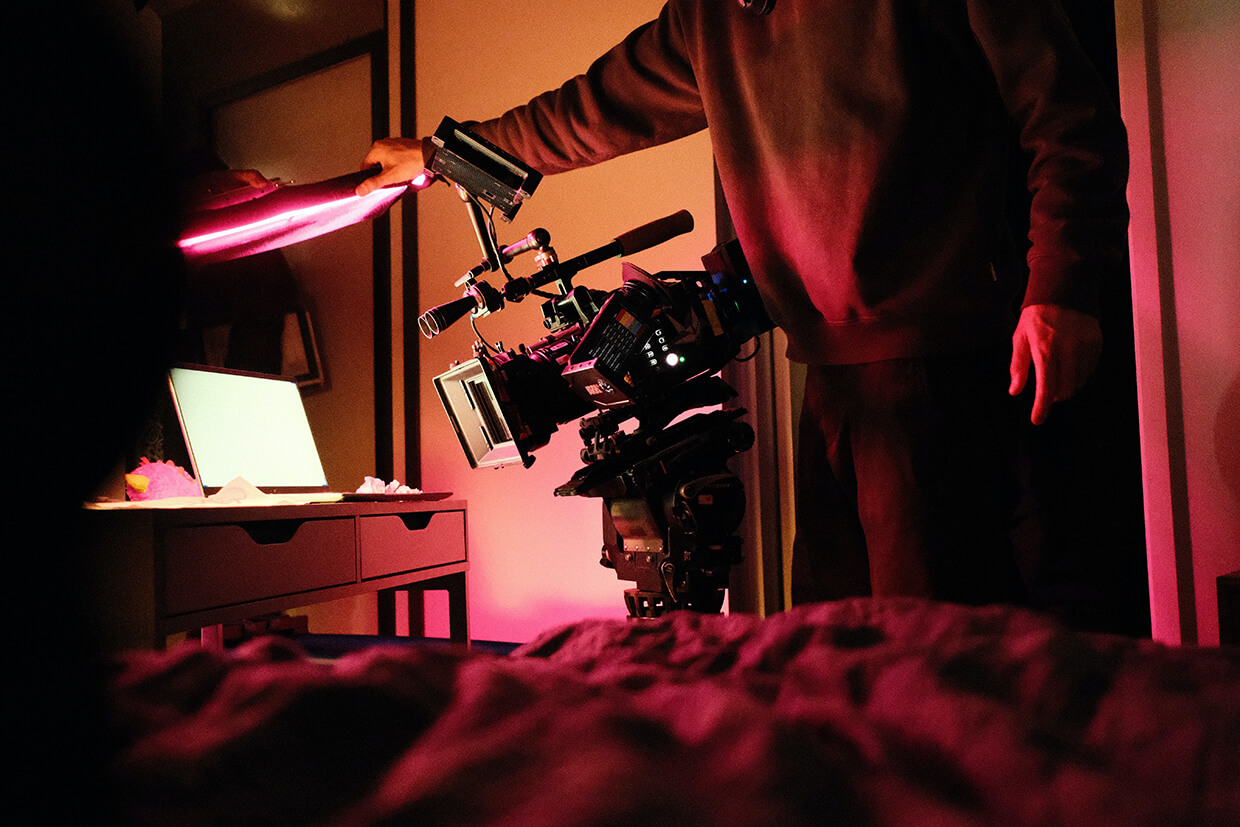
Television series offer a unique opportunity for long-form musical storytelling. Unlike feature films, where the narrative unfolds within a limited timeframe, a series allows characters, relationships, conflicts, and emotional journeys to develop gradually across multiple episodes and seasons. This creates a distinct challenge for a composer: the music must not only serve individual scenes but also sustain a coherent identity throughout an extended narrative.

Creative Development & Discovery

Every series begins with a conversation. Before any music is written, I collaborate closely with directors, producers, writers, and creative teams to understand the vision behind the project. These discussions often extend beyond the storyline itself. We explore themes, character motivations, visual aesthetics, emotional trajectories, pacing, and audience expectations. Understanding what the series feels like is often just as important as understanding what it is about. Scripts, treatments, concept materials, mood boards, visual references, and rough cuts become valuable tools during this stage. Together, we identify the emotional foundation of the narrative and determine how music can contribute to its storytelling language. From these conversations, the first musical sketches begin to emerge. These sketches serve as creative experiments designed to explore different emotional directions and sonic identities. Some may focus on melody, others on atmosphere, rhythm, orchestration, or texture. Through listening sessions and creative feedback, these ideas gradually evolve into a musical concept capable of representing the world of the series. Eventually, a central theme emerges—a musical foundation that captures the essence of the story and serves as the score’s emotional core.


Building the Score

Once the musical identity has been established, the score expands into a larger system of themes, motifs, textures, and variations. Characters may receive their own musical signatures. Relationships may develop through interconnected motifs. Major story arcs often require evolving thematic material that changes as the narrative progresses. A theme introduced in the first episode may return later in a completely different form, reflecting growth, loss, transformation, or revelation. Throughout the production process, every cue is carefully shaped around the needs of the story. Tension, intimacy, suspense, hope, tragedy, mystery, and triumph each demand their own musical treatment. The objective is never simply to accompany the picture, but to deepen the emotional experience of the audience. A successful television score becomes more than background music. It becomes part of the narrative itself—a recognizable voice that accompanies viewers throughout their journey and remains connected to the identity of the series long after the final episode ends.

Selected Works

Series
YearTitleTypeRoleCredits
012006Parvaz dar HobabSeriesAssistantArrangerOrchestratorPerformer
022007Nardebame AsemanSeriesAssistantArrangerOrchestratorPerformer
032007Bi Seda Faryad KonSeriesAssistantArrangerOrchestratorPerformer
042008Bachehaye HoorSeriesAssistantArrangerOrchestratorPerformer
052008Paiize PedarsalarSeriesAssistantArrangerOrchestratorPerformer
062008EghmaSeriesAssistantArrangerOrchestratorPerformer
072008Talagh Dar Vaght-e EzafehSeriesAssistantArrangerOrchestratorPerformer
082008Yek Lahze DirtarSeriesLead ComposerArrangerOrchestratorPerformer
092008Saheb DelanSeriesAssistantArrangerOrchestratorPerformer
102009Halghehye SabzSeriesAssistantArrangerOrchestratorPerformer
112009Ghalbe Yakhi Media!Media ProjectAssistantArrangerOrchestratorPerformer
122009Gav SandoghSeriesAssistantArrangerOrchestratorPerformer
132009Marge Tadrijie Yek RoyaSeriesAssistantArrangerOrchestratorPerformer
142011Avaz-e GanjishkhaSeriesLead ComposerArrangerOrchestratorPerformer
152012Sayeh-ye SoltanSeriesLead ComposerArrangerOrchestratorPerformer
162013Khaneye PedariSeriesLead ComposerArrangerOrchestratorPerformer
172013Dar GhessehaSeriesLead ComposerArrangerOrchestratorPerformer
182015RoohollahSeriesLead ComposerArrangerOrchestratorPerformer
192016Shayad Baraye Shoma Ettefaq BiyoftadSeriesLead ComposerArrangerOrchestratorPerformer
202017Bachehaye Nesbatan BadSeriesLead ComposerArrangerOrchestratorPerformer
212019Jadeh-ye ChaloosSeriesLead ComposerArrangerOrchestratorPerformer
222019RahaeeSeriesLead ComposerArrangerOrchestratorPerformer
232020Peyda va PenhanSeriesLead ComposerArrangerOrchestratorPerformer
242020ParastaranSeriesLead ComposerArrangerOrchestratorPerformer
252020Gheir-e AlaniSeriesLead ComposerArrangerOrchestratorPerformer
262021Gahi Be Posht-e Sarat Negah KonSeriesLead ComposerArrangerOrchestratorPerformer
272021Hamechiz AnjastSeriesLead ComposerArrangerOrchestratorPerformer
282023Zire HamkafSeriesLead ComposerArrangerOrchestratorPerformer
292023SarjoogheSeriesLead ComposerArrangerOrchestratorPerformer
302024Posht-e PardeSeriesLead ComposerArrangerOrchestratorPerformer
312024Mar MahiSeriesLead ComposerArrangerOrchestratorPerformer
322025Tamam RokhSeriesLead ComposerArrangerOrchestratorPerformer
332026Dar o TakhtehSeriesLead ComposerArrangerOrchestratorPerformer
342026DashtestanSeriesLead ComposerArrangerOrchestratorPerformer
352026Do Nimeye MahSeriesLead ComposerArrangerOrchestratorPerformer
362026Roshanaie ShabSeriesLead ComposerArrangerOrchestratorPerformer


Next Project

Back To Top
Theme Mode

Behnood Yakhchali is a film composer from Iran, working across the full spectrum of visual media — including cinema, television, theater, video games, and digital storytelling. His portfolio also extends to collaborations with vocal artists, instrumental music, and solo albums. With a distinctive approach to scoring, he blends emotional nuance with narrative sensitivity, delivering compositions that support and elevate the visual experience.

Born into a culturally rich and academically inclined family, Behnood is the son of an electronics engineer and a literary translator. His sister, originally trained in English literature, later pursued a career as a senior flight attendant. Music found its way into the Yakhchali household early: both siblings began learning piano at the age of five, initially under the guidance of Ahmad Joolaee, followed by several other teachers. Eventually, they transitioned to a self-taught path, refining their technique and becoming proficient performers.

From the outset, Behnood showed an instinct not just for performance but for creation. Even while studying the classical repertoire, he couldn’t resist reinterpreting the works — rearranging passages, altering structures, and adding or omitting sections. Through this process, he developed a deeply personal relationship with the music of composers like Bach, Beethoven, Schubert, Mendelssohn, and others, crafting his own variations and internalizing the compositional language behind the notes.

His professional journey began in 2001, and between 2005 and 2009, he worked as an assistant to acclaimed composer Karen Homayounfar. This period offered valuable insight into the industry, but ultimately Behnood chose to pursue an independent artistic path — one rooted in personal intuition and emotional authenticity rather than convention.

In addition to his work in Iranian cinema and television, he has composed music for international broadcasters such as ZDF (Germany), SF DRS (Switzerland), ARTE (France), and Al Jazeera, contributing to documentaries, news features, and cultural programs. He has also been involved in a number of international NGO initiatives, choosing not to disclose their names out of respect for the nature of their humanitarian missions.

In 2012, Behnood founded Ropotronic, a versatile music ensemble that adapts its format to include both classical orchestra and rock band line-ups. The group performs a wide range of repertoire — from rock, pop, jazz, and classical works to film music — showcasing both Behnood’s own compositions and pieces by other composers. Ropotronic has appeared in numerous performances, spanning live concerts, film scores, theatrical productions, and collaborations with vocalists and stage performers.

While several of his scores have received awards over the years, Behnood maintains a philosophical distance from the idea of competition in art. He does not believe in the existence of “good” or “bad” music, and therefore sees no objective metric for judgment. For him, the only meaningful measure of a work’s success is how it resonates with the audience — the emotional and intuitive response of people, not the verdict of juries.

Stylistically, Behnood resists categorization. Although he can compose in a range of genres — from electronic and rock to orchestral and ambient — he avoids identifying with any single “style.” He prefers creative freedom, unless working within stylistic constraints serves the narrative. At the core of his work lies a classical foundation: whether writing for orchestra, synthesizer, or hybrid ensembles, his structural thinking is deeply rooted in classical principles, which he values for their balance, precision, and musical integrity.

Technically, Behnood’s process spans the full arc of production: composition, arrangement, orchestration, recording, and post-production. He primarily works in Reaper, and also uses Nuendo, Sibelius, and occasionally TouchDesigner for projects involving interactive or visual components. Though his academic background is in computer software engineering, his path in music has been self-guided and shaped by long-term experience, exploration, and deep listening.

Alongside his work as a composer, Behnood is actively engaged in the field of Artificial Intelligence, particularly in its creative and educational applications. He incorporates AI into his professional workflow as an advanced creative and audio assistant, using it to support research, experimentation, sound development, production design, and various stages of music creation. He also contributes to educational initiatives that help artists, musicians, and creative professionals understand and integrate AI technologies into their artistic practice.

Behnood regards Artificial Intelligence as more than a technological tool; he sees it as a new creative paradigm that is transforming the way audiovisual projects are conceived, developed, and realized. In his view, AI represents an emerging methodology for artistic production — one that expands creative possibilities, accelerates experimentation, and enables new forms of storytelling, composition, sound design, and multimedia expression. Rather than replacing human creativity, he believes AI functions best as a collaborative partner, amplifying imagination while preserving the central role of human intuition, emotion, and artistic judgment.

Born in Iran, Behnood spent part of his childhood in Paris, growing up between France and Iran during wartime transitions. He attended his early schooling in northern Iran while his family lived in hotel residences due to his father’s frequent professional travel between the two countries. This cross-cultural upbringing deeply informs his musical sensibility. He is fluent in both Persian and English and currently resides in Tehran, while maintaining strong ties with international collaborators and frequently traveling throughout Europe.

Outside of his professional work, Behnood is passionate about cooking, traveling, and tennis — three lifelong interests that continue to nourish his creative thinking. He often writes loop-based melodic themes, typically built around short lyrical phrases, with a tone that leans toward melancholy, mystery, and quiet reflection.

His music has been described as minimal, emotionally resonant, and structurally elegant — a sound that avoids theatrical excess and instead serves the emotion of each story with honesty and depth. Whether scoring a feature film, composing for interactive media, or creating an instrumental work, Behnood’s artistic mission remains clear:
to serve the narrative, shape emotion, and compose with sincerity.

Contact